
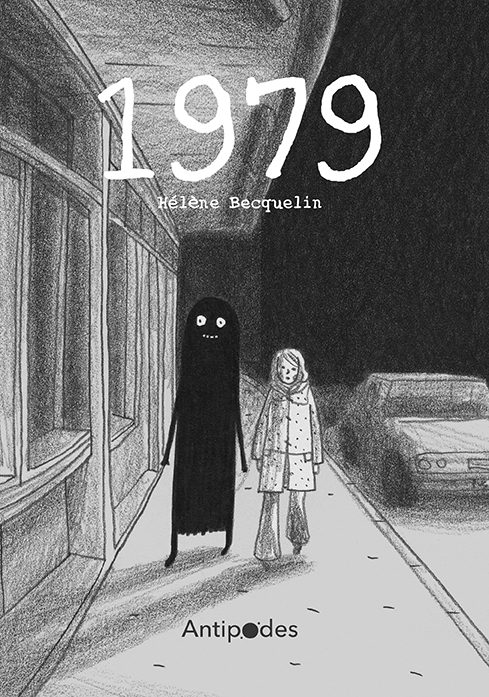
1979
Hélène BecquelinIn the shifting landscape of 1979, the abrasive chords of the punk revolution offer a sanctuary for a teenage girl stifled by the conformist echoes of a Swiss mountain town. 1979 is a poignant graphic memoir by Hélène Becquelin that captures the precise moment when cultural static gives way to a life-defining signal.
Set against the backdrop of religious boarding schools and provincial isolation, the narrative follows Hélène as she navigates the transition from a solitary adolescence to the discovery of a subversive new world. As disco and folk dominate the airwaves, Hélène finds herself increasingly alienated, seeking a language that speaks to her internal restlessness. Becquelin employs a clean, evocative illustrative style that mirrors the stark honesty of her coming-of-age journey.
The structure is episodic yet deeply cohesive, using iconic 1979 albums—from The Clash’s London Calling to Joy Division’s Unknown Pleasures—as temporal anchors for the narrative. This thematic layering bridges the gap between historical turbulence, such as the Iranian Revolution, and the personal rebellion of a young woman dyeing her clothes black in a bathroom sink. The prose is understated and rhythmic, emphasizing the visceral impact of sound and subculture on the human psyche.
This work stands as a sophisticated tribute to the transformative power of art and the resilience of the teenage spirit. It serves as an essential record of how music does more than provide a soundtrack—it provides a map for survival in a world that demands conformity.