Beyond the Numbers: The 11th International Istanbul Arabic Book Fair
From 15 to 23 August 2026, the International Istanbul Arabic Book Fair returned to the Yenikapı Eurasia Performance and Arts Center for its eleventh edition. For nine days, publishers, writers, translators and readers from across the Arab world, Türkiye, the Balkans, the Caucasus, Central Asia and the diaspora in Europe gathered under one roof, with Syria taking part as Guest of Honour for the first time. İntrotema was there throughout, with Co-Founder Dr. Muhammed Ağırakça serving as the fair’s General Coordinator, and once again hosted the Copyright Corner, our own rights meeting programme, which this year reached its fourth edition and was joined for the first time by a dedicated Translation Corner.
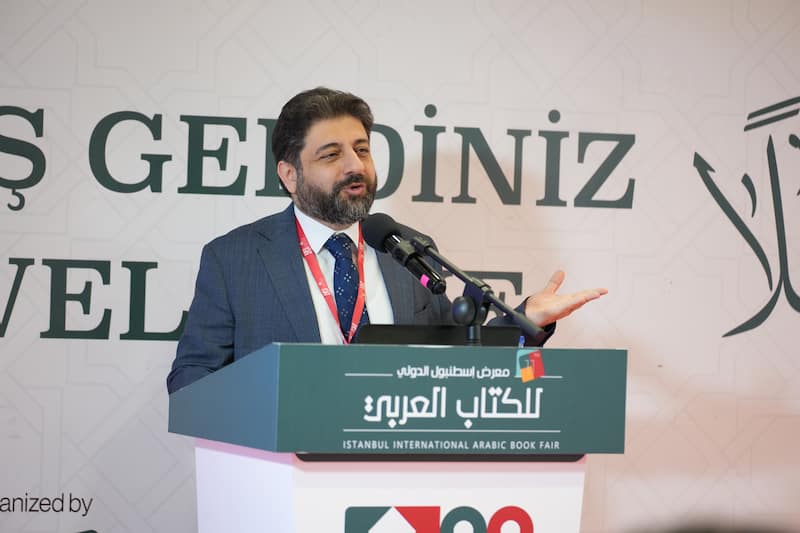
A note from the coordinator
A story of culture, beyond the numbers
How do you measure the success of a book fair? By the number of publishers who come, the books on display, the people who walk through the doors? All of that matters, of course. But the real story of some cultural projects sits just behind the figures. Sometimes the value of a fair lies in two people who live in the same city, yet have never met, finding themselves in front of the same book. Sometimes it lies in someone who has lived far from home for years being able to walk up to their own country’s stand without fear.
What mattered most to me this year was not the number of visitors but how varied they were. The Istanbul Arabic Book Fair has never been simply “a fair for Arabs”. Year after year we watch visitors from Uzbekistan, Kazakhstan, the Caucasus and the cities of the Balkans linger over Arabic books, and it reminds us of an old cultural map we had almost forgotten: centuries in which books, scholars, poets and ideas travelled freely between these worlds. Perhaps our task today is to make those invisible roads visible again.
Dr. Muhammed Ağırakça, Co-Founder of İntrotema and General Coordinator of the fair
TULIA: Turkish Literature in Arabic
One concrete answer to that question is TULIA – Turkish Literature in Arabic. For years, Turkish books had been finding their way into Arabic, but nobody had a complete record of who translated what, where and for which publisher. TULIA set out to build that memory, and has so far mapped more than 2,000 titles, charting the journey of Turkish literature through the Arab world. As Dr. Ağırakça puts it, if you want to build the future of a cultural relationship, you first have to build its memory.
The TULIA stand became one of the busiest corners of the fair. Prof. Dr. Nevzat Tarhan, Dr. İlhami Fındıkçı and Dr. Ümit Naci Yorulmaz met readers and signed the Arabic editions of their books there, each with a loyal and growing readership in the Arab world.
Syria, Guest of Honour
This year Syria took part as Guest of Honour for the first time. On paper it might look like just another country in the programme, but the joy on the faces of Syrian visitors as they approached their country’s stands told a much deeper story: people who had lived far from home for years, able to browse their own country’s books, publishers and writers freely once more.
The fair has also become a meeting point for the Arab diaspora. Poets, writers and thinkers travelled from Germany, France, Belgium and across Europe, so that Istanbul brought together not only Türkiye and the Arab world, but the Arab world and its own diaspora. Over the nine days, hundreds of events filled the venue with poetry, music, art, children’s activities and conversations with writers and publishers, while close to a hundred international media outlets covered the fair in English, Russian, Kurdish and Arabic.
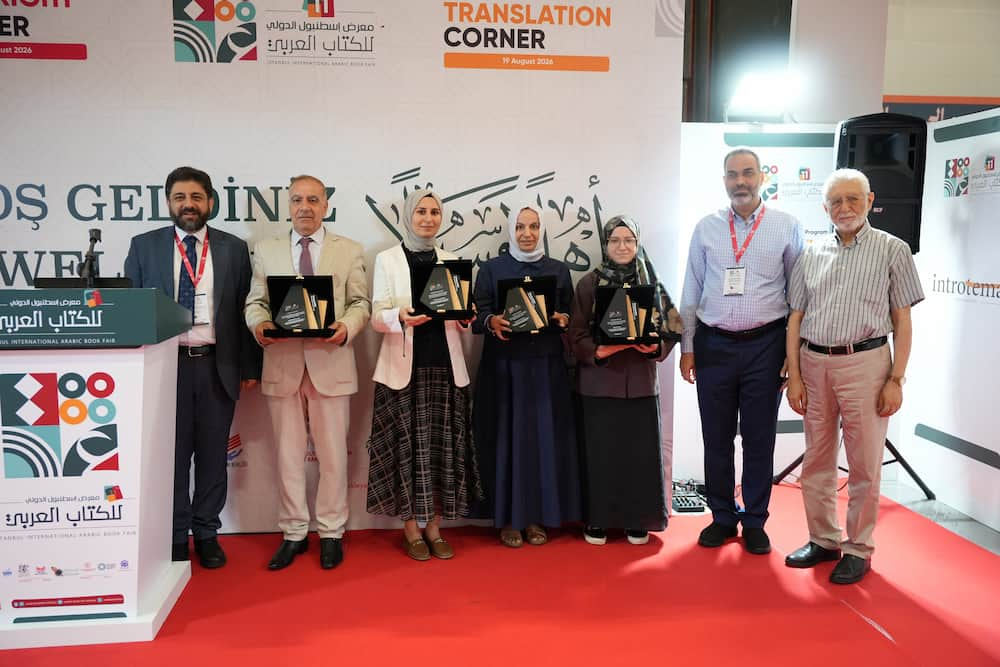
The fair’s translation and publishing awards
One of the most meaningful moments of the week was the presentation of the fair’s own awards, celebrating the people and publishers who build bridges between Turkish and Arabic.
Copyright Corner
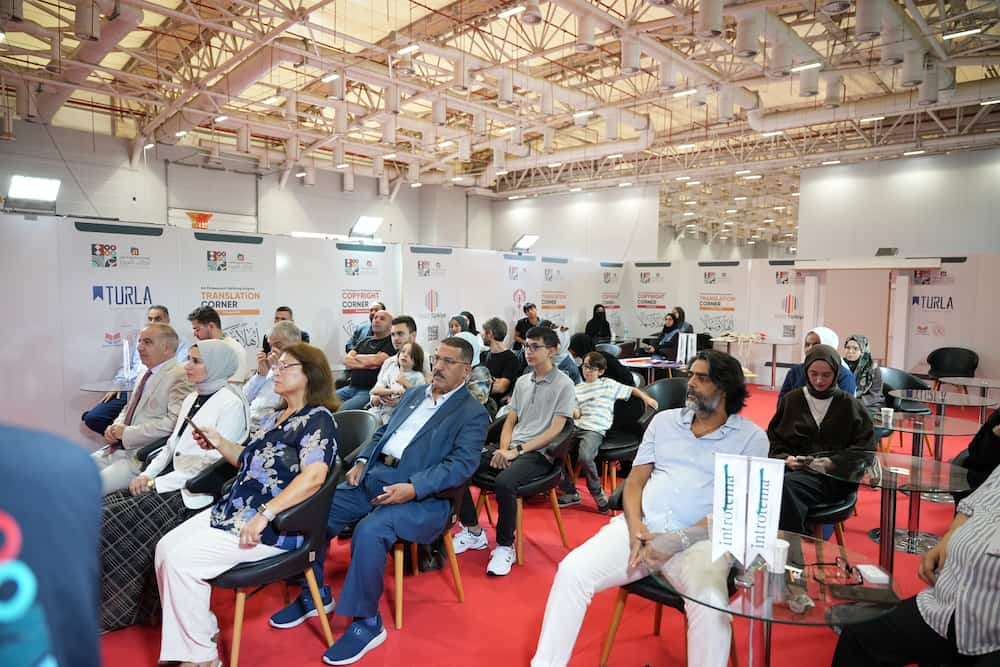
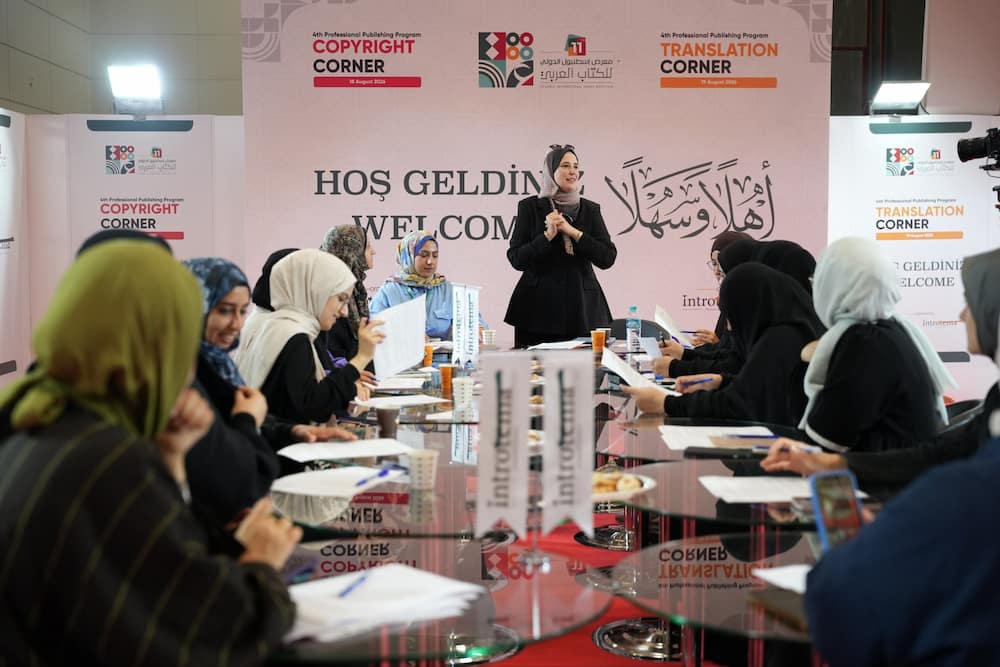
On 18 August, İntrotema hosted the Copyright Corner at Stand D32, the fourth edition of our Professional Publishing Program at the fair. Created to build bridges between Turkish and Arabic literature, it is a meeting point for publishers, translators, rights professionals and anyone keen to learn more about Arabic publishing, bringing both sides to the same table for focused rights conversations. Year after year, it has proved fertile ground for new translation and co-publishing projects. You can read about last year’s edition, or explore our other international cultural programmes.
Translation Corner
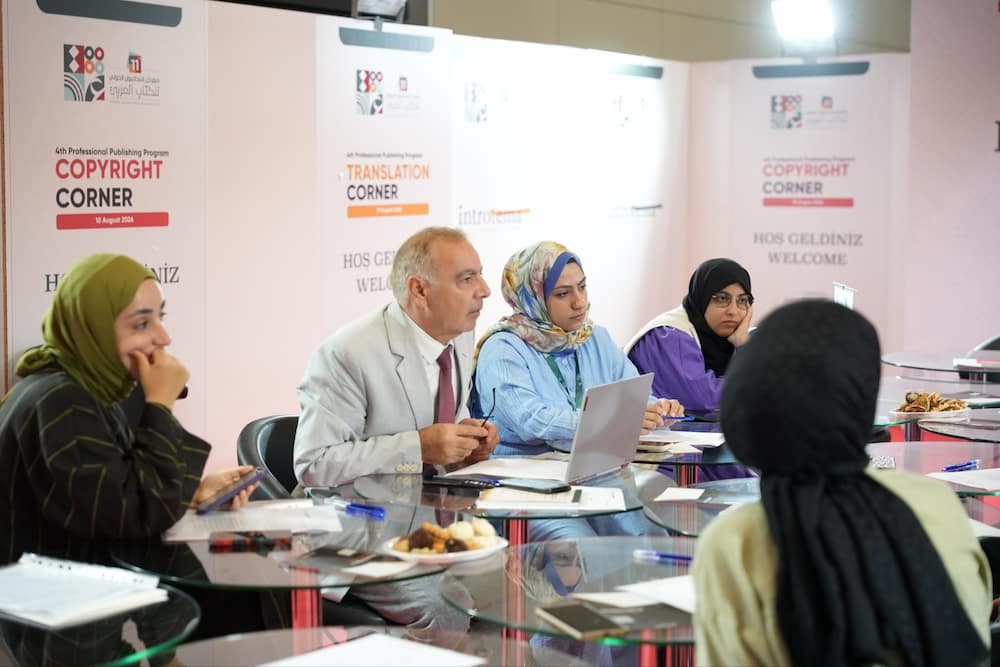
Alongside it, this year saw the very first Translation Corner: a hands-on translation workshop in two sessions, one working from Arabic into Turkish and the other from Turkish into Arabic. Led by Prof. Dr. Eyüp Tanrıverdi and Dr. Fatma Zehra Buzeydi, participants worked on the same texts and compared the many different ways of approaching them, in a day of translation, discussion and close reading.
Translator Connect
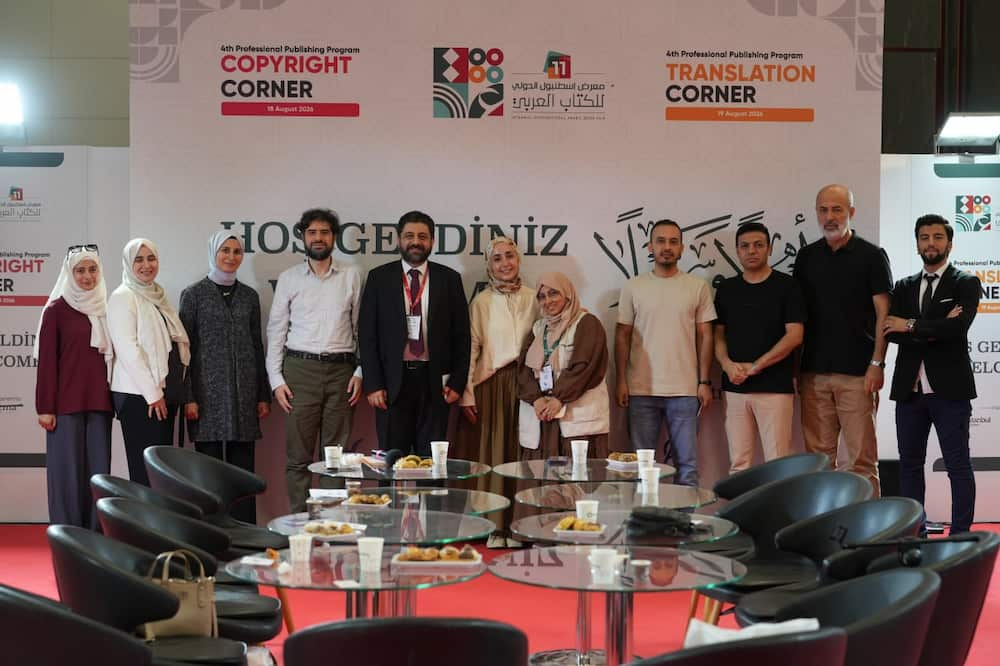
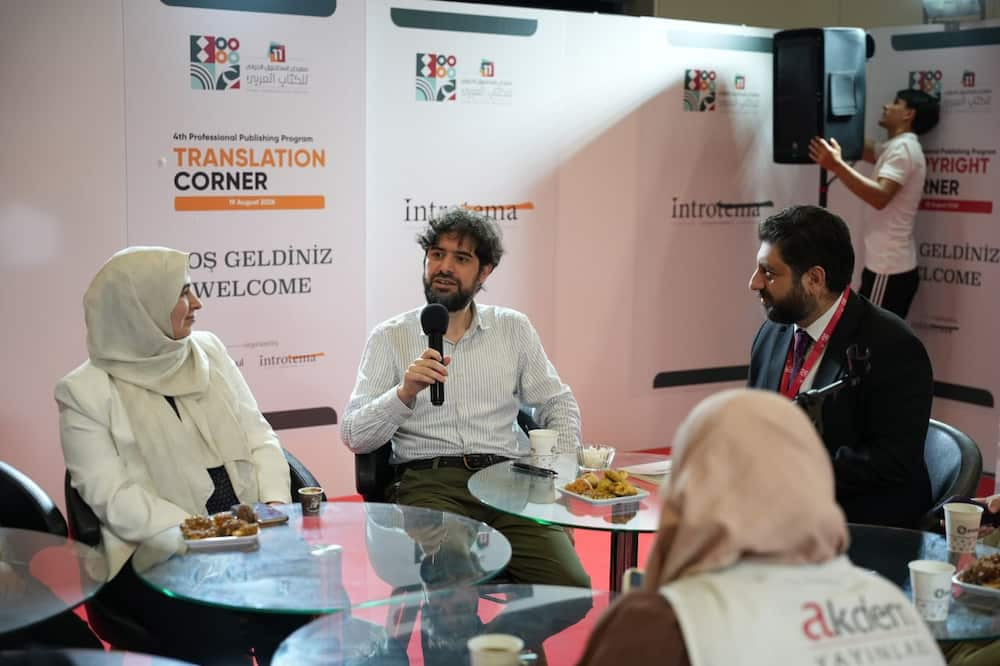
Alongside the workshop, Translator Connect brought translators, publishers and editors together around the same tables, creating space to share experience, talk about upcoming projects and put faces to names. For a fair built on the movement of books between languages, it was a fitting place to celebrate the people who make that movement possible.
Meetings and friendships
The fair was also a week of memorable encounters. The International Union of Islamic Book Publishers held its eleventh Publishers’ Meeting at the fair, bringing together 65 publishers from 19 countries, from Palestine to East Turkestan and from Morocco to Japan and the United Kingdom. We welcomed Kuwaiti novelist Saud Alsanousi, publishers from Eritrea who now publish from Nairobi to reach readers around the world, and a delegation of 34 scholars from three Balkan countries. Guests also included Mohamed Ajana, Secretary General of the Islamic Commission of Spain, and Dr. Sefer Hasanov of the Higher Islamic Institute in Bulgaria.
Eleven years on, the fair remains, in Dr. Ağırakça’s words, a story of persistence: a book crossing from one language into another, a poem travelling beyond its borders, a child standing for the first time in front of a different alphabet.