
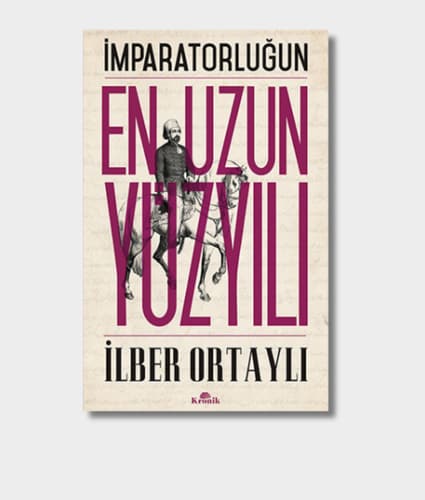
The Empire’s Longest Century
İlber Ortaylı"Ottoman modernization was an autocratic one. Internal and external developments in the last forty years of the empire's life dragged it from this autocratic modernization toward a constitutional monarchy, ultimately leaving the young Republic a legacy of political institutions such as a parliament, political party cadres, and a press," writes İlber Ortaylı.
In The Empire's Longest Century, the preeminent historian presents his masterpiece on the 19th-century Ottoman Empire—its most dynamic, painful, exhausting, and consequential era. He argues that the founders of the modern Turkish Republic did not inherit a medieval society, but rather the remnants of an empire that had spent its final century enduring the fierce labor pains of modernization. The physicians, scientists, jurists, and historians of the new Republic emerged directly from the late Ottoman intellectual elite, inherently adopting its educational, administrative, and financial systems.
Translated into multiple languages including Arabic, German, and Greek, this seminal work masterfully examines the political, social, and cultural transformations of the Tanzimat period and beyond. Ortaylı demonstrates that to truly understand the strengths and vulnerabilities of Turkey's modern political and social institutions, one must first comprehensively grasp the complex, intertwined history of late Ottoman modernization.