
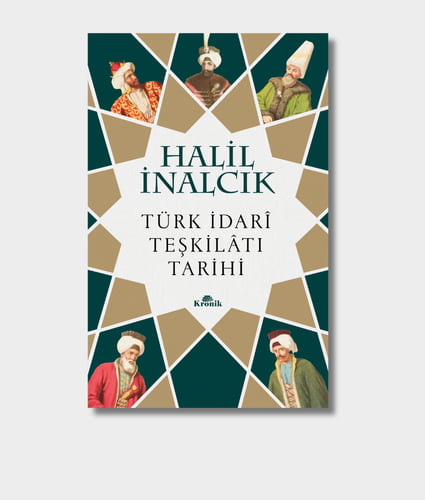
History of Turkish Administrative Organization
Halil İnalcıkCompiled from the lecture notes of Halil İnalcık—who dedicated his life to researching Ottoman history and taught at prestigious institutions like Ankara University, Chicago, Harvard, and Princeton—this work remains highly relevant, offering history enthusiasts fresh perspectives and new horizons. Through these lectures, İnalcık trained generations of students who would later elevate Ottoman studies to its current global standing.
The book masterfully details how the Ottoman state was administered from its origins as a frontier principality to the fall of Sultan Abdulhamid II. It explores the functioning of the legal system, the structure and historical roots of state institutions, the causal links between political events and economic conditions, and the intricate relationship between religion and state. İnalcık also highlights how the administrative styles of ancient Turkish and Islamic states profoundly influenced Ottoman governance. Key topics such as the foundation period, the Ahis, zawiyas, the caliphate, palace organization, the kul (slave) system, the central government, the timar system, and the Tanzimat reforms are thoroughly examined.
Thanks to his vast knowledge and deep mastery of archival documents, İnalcık succeeds in presenting Ottoman history as a cohesive whole, providing a perfect summary by essentially X-raying the state's administrative structure. History of Turkish Administrative Organization is a tremendous reference work that meticulously analyzes the Turkish administrative framework—shaped by Central Asian traditions and Islam, and inherited by the Republic from the Empire.